
Iran at the 2026 FIFA World Cup: The Governance Failure FIFA Called Humility
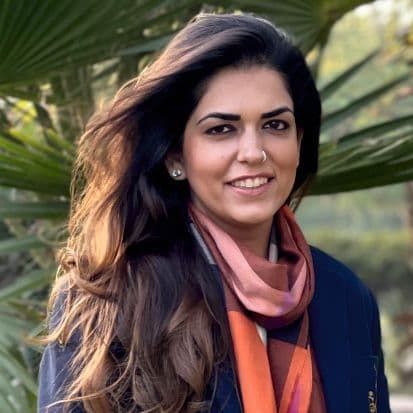 Aahna Mehrotra
A few months ago I wrote in hashtagTOISport about the dilemma hashtagFIFA faced with Iran at the FIFA hashtagWorldCup2026. The tournament began yesterday, and the dilemma has not necessarily been resolved, instead it has simply been managed.
With their base in Tijuana, Mexico (not as per original plan, which was Arizona) - hashtagIran is finally playing, but the team will only enter the hashtagUnitedStates the day before each of their 3 matches, and shall leave on the same day they play. Several members of the support squad, including key managerial and administrative staff, have been denied visas. The players themselves received their visas just 10 days before kick-off.
Iran is not the only story. Somalia's Omar Artan, set to become the first Somali referee to officiate at a World Cup, was denied entry at Miami airport despite holding a valid US visa. Iraq's Aymen Hussein was detained for nearly seven hours at the Chicago airport and the team's photographer was held for over 10 hours and denied entry entirely. Switzerland's Breel Embolo was flagged over a 2018 conviction. Haiti's only Haiti-based player received his visa so late that he missed a pre-tournament friendly.
In my article, I raised the question of FIFA's catch-22: the Russia-Ukraine precedent, the force majeure provisions, and the structural gap between what the hosting agreement promises and what a sovereign state can actually be made to deliver. FIFA's own bidding rules require that visa processing be applied in a non-discriminatory manner. That commitment does not seem to have been honoured uniformly across the 2026 World Cup.
When FIFA President Gianni Infantino was asked directly about this, his response was: "We are not the kings of the world who can rule over governments and police forces. We are a sports organisation; we try to do our best with the means that we have." While this is an honest statement, it is also a governance failure dressed as humility.
In a separate piece published last year, I argued that sport urgently needs dedicated contractual and regulatory language to address geopolitical events - distinct from force majeure, distinct from frustration, and responsive to the reality that states and parties are often unwilling to perform rather than being unable to perform. The 2026 World Cup, on its opening day, is the clearest argument yet that this work cannot wait.
Links to both pieces:
https://cdn.sanity.io/files/5sv807n3/production/cc044f8a1ef2f1dc19b9da4ea51c2cf06871f78a.pdf